
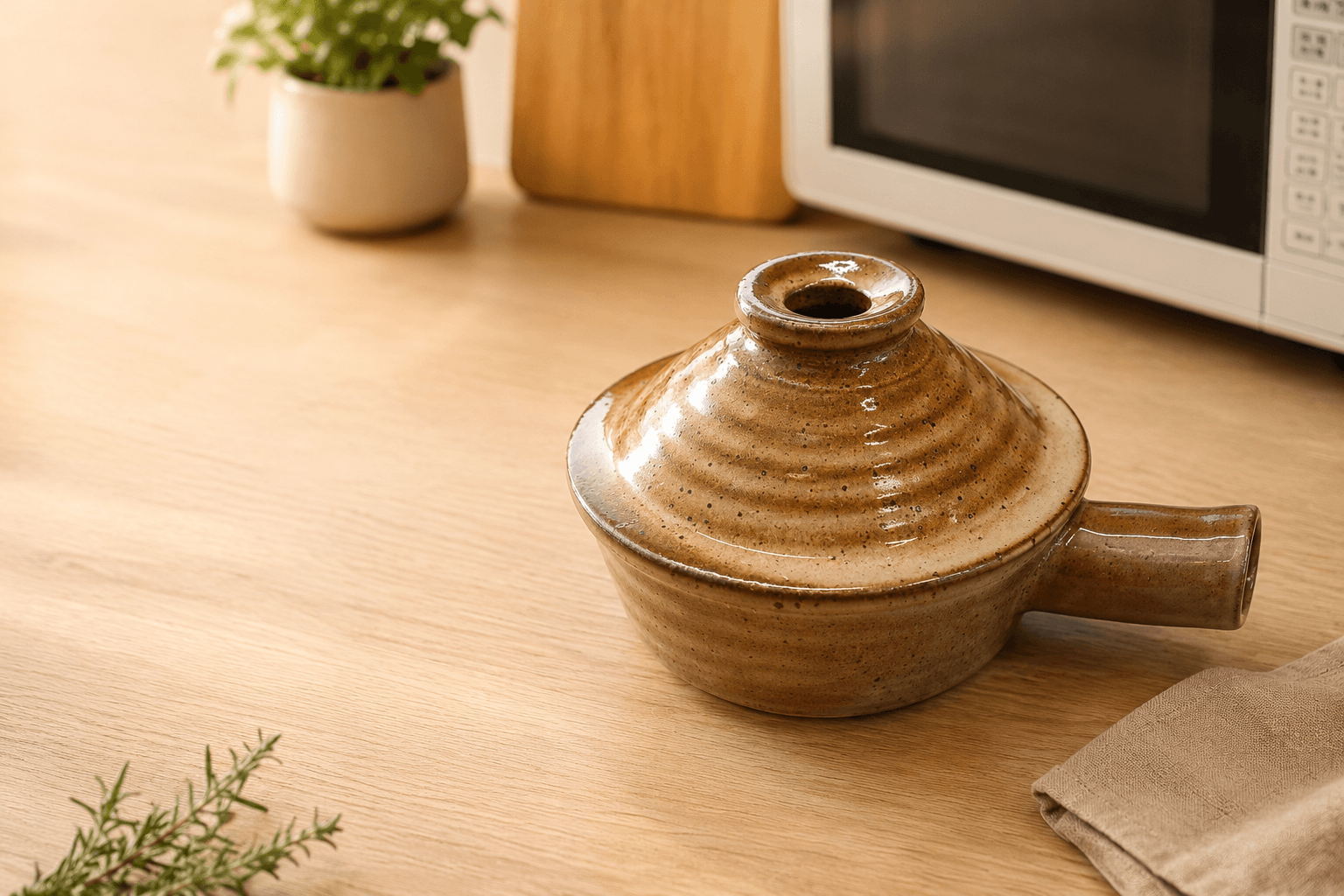
Yes, ceramic can be microwave safe — but only if it is labeled microwave-safe, has no metallic trim, and is free from cracks or damage. Before you put any ceramic bowl, mug, plate, or cooker in the microwave, it is worth taking a quick look.
If you’ve ever stood in front of the microwave holding a ceramic bowl and wondering, “Is this actually safe?” you’re not alone.
Ceramic is one of the most common materials people use for reheating leftovers, making quick breakfasts, and cooking small microwave meals. But not every ceramic dish belongs in the microwave. Some are perfectly fine. Others may get too hot, crack, spark, or simply were not made for microwave cooking in the first place.
In most cases, ceramic is microwave safe when it is clearly marked for microwave use, has no metal decoration, and is in good condition. The U.S. Food and Drug Administration explains that microwaves pass through materials such as glass, paper, ceramic, and plastic, though containers can still become hot from the food inside. The FDA also notes that only ceramic or other cookware that specifies it is microwave-safe should be used for microwave heating.
Let’s break it down in plain English.
What Does “Microwave-Safe Ceramic” Actually Mean?
A microwave-safe ceramic dish is designed to be used in the microwave without cracking, sparking, or becoming damaged under normal use. For food use, it should also be labeled food-safe.
In everyday terms, microwave-safe ceramic should be able to:
- Hold hot food without breaking
- Heat without sparking
- Avoid metallic paint, trim, or decoration
- Stay structurally stable during normal microwave use
- Be appropriate for cooking, reheating, or serving food
That last point matters. A dish can look like regular ceramic and still not be ideal for microwave cooking, especially if it is handmade, vintage, cracked, chipped, or decorated with metallic details.
A good rule of thumb: if the manufacturer says it is microwave-safe, use it as directed. If there is no label and you are unsure, be cautious.
Why Ceramic Is Commonly Used in the Microwave
Ceramic works well in the microwave because microwaves generally pass through ceramic material and heat the water molecules in the food instead. That is one reason many microwave-safe bowls, plates, mugs, and ceramic microwave cookware pieces are made from ceramic.
Ceramic is also popular for everyday microwave cooking because it feels sturdy, works well for warm meals, and can often go from microwave to table without needing another serving dish.
That does not mean ceramic always stays cool. It can still get hot because the food inside transfers heat to the dish. This is normal. Even microwave-safe ceramic can be hot after cooking, so use a dry towel, potholder, or oven mitt when removing it.
This is especially true when cooking foods with moisture, sauces, eggs, vegetables, or anything that steams under a lid.
When Ceramic Is Not Microwave Safe
Not all ceramics belong in the microwave. Avoid using ceramic in the microwave if it has any of the following issues.
1. Metallic Trim or Gold Details
If a ceramic plate, mug, or bowl has gold, silver, copper, or metallic paint, do not microwave it. Metal can cause sparking and may damage the microwave.
This includes:
- Gold-rimmed plates
- Metallic lettering
- Silver decorative lines
- Shiny metallic glazes
- Holiday or vintage dishes with metallic accents
Even if the metallic detail looks small, it is better not to risk it.
2. Cracks, Chips, or Crazing
A cracked or chipped ceramic dish should not be used for microwave cooking. Small cracks can trap moisture. When heated, that moisture may expand and cause the dish to crack further or break.
Crazing — those tiny hairline cracks in the glaze — is also a reason to be cautious, especially for cooking or storing food.
3. Unknown Vintage or Imported Pottery
Vintage, handmade, or imported pottery can be beautiful, but it is harder to know whether it was made with food-safe glazes. The FDA warns that pottery containing leachable lead should not be used for cooking, serving, or storing food or drinks.
The California Department of Public Health also notes that home test kits do not always prove a dish is safe. A negative test result does not guarantee that ceramic dishware is free from lead risk.
For daily microwave cooking, stick with modern ceramic cookware that is clearly labeled microwave-safe and food-safe.
4. Ceramic That Gets Extremely Hot by Itself
Some ceramic dishes absorb more microwave energy than others. If an empty dish becomes very hot after a short microwave test, it may not be a good choice for microwave cooking.
A little warmth is normal. Too hot to touch is a warning sign.
How to Tell If Ceramic Is Microwave Safe
Here is a simple checklist before putting ceramic in the microwave.
Check the Bottom of the Dish
Look for words or symbols such as:
- Microwave safe
- Microwave-safe ceramic
- Safe for microwave use
- A microwave icon
If the dish has a clear microwave-safe label, that is the best sign.
Look for Metal
Do not use it if you see metallic trim, gold paint, silver details, or shiny metallic decoration.
Inspect the Surface
Avoid dishes with:
- Cracks
- Chips
- Deep scratches
- Crazed glaze
- Loose or damaged coating
Do a Quick Water Test
If you are unsure, you can try a simple test:
- Place the empty ceramic dish in the microwave.
- Put a microwave-safe cup of water beside it.
- Heat for about 30 seconds.
- Carefully check the dish.
If the dish becomes very hot while the water is only warm, the dish may not be ideal for microwave use.
This test does not prove food-safety or glaze safety, but it can help you spot ceramic that overheats unusually fast.
Quick Ceramic Microwave Safety Table
| Ceramic Item | Microwave Safe? | What to Check |
|---|---|---|
| Modern ceramic bowl | Usually yes | Look for a microwave-safe label and make sure there is no damage. |
| Gold-rimmed plate | No | Metallic trim can spark in the microwave. |
| Cracked ceramic mug | No | Cracks can worsen with heat and trapped moisture. |
| Handmade pottery | Only if confirmed | Ask the maker or seller if it is food-safe and microwave-safe. |
| Vintage ceramic dish | Be cautious | Unknown glazes or older decorations may not be suitable for food heating. |
| Ceramic microwave cooker | Yes, if labeled | Use according to the product instructions and handle carefully after heating. |
Is Ceramic Better Than Plastic in the Microwave?
For many everyday cooks, ceramic feels like a better choice than plastic because it is sturdy, reusable, and does not soften or warp the way some plastics can.
That does not mean all plastic is unsafe. Microwave-safe plastic can be used as directed. But many people prefer ceramic for regular hot meals because it feels more durable, cleans easily, and avoids the guesswork of old takeout containers or random plastic tubs.
The FDA notes that some plastic containers should not be used in the microwave because they may melt from the heat of the food inside. The USDA also advises using containers labeled for microwave oven use.
If your goal is to cook quick meals in the microwave without relying on plastic, a dedicated microwave-safe ceramic cooker is a practical everyday option.
Why a Ceramic Microwave Cooker Is Useful
A ceramic microwave cooker is different from grabbing any random bowl from the cabinet.
A good ceramic microwave cooker is designed for microwave cooking, not just reheating. It gives you a cooking vessel, serving dish, and easy-clean container in one. That can make everyday microwave cooking simpler, especially when you are making small meals, quick breakfasts, warm snacks, or single-serving desserts.
A ceramic microwave cooker can help with:
- Keeping moisture inside the food
- Reducing splatters
- Cooking eggs, vegetables, sauces, and simple meals
- Making small portions quickly
- Serving food directly from the same dish
- Avoiding disposable plastic containers
The lid is especially helpful. Covered microwave cooking can help food steam gently instead of drying out. That matters when you are making things like poached eggs, omelets, soft vegetables, baked banana, or quick sauces.
At the same time, remember that ceramic still gets hot. The food heats the cookware, so always handle it carefully after microwaving. If your cooker has a hollow handle or stay-cool handle design, that can make it easier to remove and carry, but it is still smart to use a dry potholder or oven mitt.
Quick Safety Checklist Before You Microwave Ceramic
- Is it clearly labeled microwave-safe?
- Is it free from gold, silver, or metallic trim?
- Is it free from cracks, chips, or crazing?
- Is it modern and food-safe?
- Is the lid microwave-safe and not sealed airtight?
- Are you avoiding sudden temperature changes?
- Are you using a dry towel, potholder, or oven mitt when removing it?
What You Should Avoid Microwaving in Ceramic
Even if your ceramic dish is microwave-safe, some foods and habits still need care.
Avoid microwaving:
- Ceramic with metal trim
- Empty ceramic dishes for long periods
- Cracked or chipped ceramic
- Very dry foods without moisture
- Sealed containers with no venting
- Unknown vintage pottery
- Handmade pottery not confirmed as food-safe and microwave-safe
Also, do not move ceramic straight from the freezer to the microwave unless the manufacturer says it is safe for that kind of temperature change. Sudden temperature shifts can cause cracking.
Tips for Cooking Safely with Microwave Ceramic Cookware
Use Short Cooking Times First
Start with a shorter time, then add more if needed. Microwaves vary by wattage, and food can continue cooking after the microwave stops.
Let Food Rest
Resting time helps heat distribute more evenly. This is especially helpful for eggs, sauces, vegetables, and soft desserts.
Use a Lid When Appropriate
A lid helps trap steam and keep food moist. Just make sure the lid is microwave-safe and not sealed airtight unless the product is designed that way.
Stir or Rotate When Needed
Microwaves can heat unevenly. Stirring or rotating helps food cook more evenly.
Use Oven Mitts
Even if the handles stay cooler than the body, the ceramic itself can become hot. Always handle with care.
Quick Answer: Can You Put Ceramic in the Microwave?
Yes, you can put ceramic in the microwave if it is labeled microwave-safe, has no metal decoration, and is not cracked or damaged.
For everyday microwave cooking, the safest choice is modern, microwave-safe ceramic cookware made for food use. Avoid vintage, unknown, metallic, or damaged ceramic pieces.
FAQ
Is ceramic microwave safe?
Most ceramic is microwave safe if it is labeled as such and does not have metallic trim or damage. Always check the manufacturer’s instructions before using ceramic in the microwave.
Can you put ceramic in the microwave?
Yes, you can put ceramic in the microwave if it is microwave-safe, food-safe, free from metal decoration, and not cracked or chipped.
How can I tell if ceramic is microwave safe?
Check the bottom of the dish for a microwave-safe label or symbol. Also look for metal trim, cracks, chips, or damaged glaze. If there is no label and you are unsure, do not use it for microwave cooking.
Why does my ceramic bowl get hot in the microwave?
Microwaves heat the food first, and the food transfers heat to the bowl. Some ceramic materials may also absorb more heat than others. A warm bowl is normal, but an empty dish that gets extremely hot may not be ideal for microwave use.
Can ceramic crack in the microwave?
Yes. Ceramic can crack if it has hidden damage, trapped moisture, sudden temperature changes, or if it was not designed for microwave use.
Can I microwave ceramic with gold trim?
No. Ceramic with gold, silver, copper, or metallic trim should not be used in the microwave because metal can cause sparking.
Can I microwave handmade pottery?
Only if the maker confirms it is food-safe and microwave-safe. Avoid handmade pottery with metallic glaze, unknown glaze, cracks, or decorative finishes that are not intended for microwave use.
Is microwave ceramic cookware better than plastic?
It depends on the use, but many people prefer ceramic for regular microwave cooking because it is durable, reusable, and does not warp like some plastics can. Just make sure the ceramic cookware is labeled microwave-safe.
Final Takeaway
Ceramic can be a great choice for microwave cooking — but only when you use the right kind.
Choose ceramic that is clearly labeled microwave-safe, avoid metal decoration, skip cracked or vintage pieces, and use cookware designed for everyday heating and cooking. With the right microwave ceramic cookware, quick meals can be simple, practical, and a lot less messy.
Make Everyday Microwave Cooking Easier
Want a simple way to cook quick breakfasts, warm desserts, vegetables, sauces, and small meals in the microwave? Explore our microwave-safe ceramic cooker and 5-minute recipe book made for easy everyday cooking.
Shop the Ceramic Microwave Cooker