
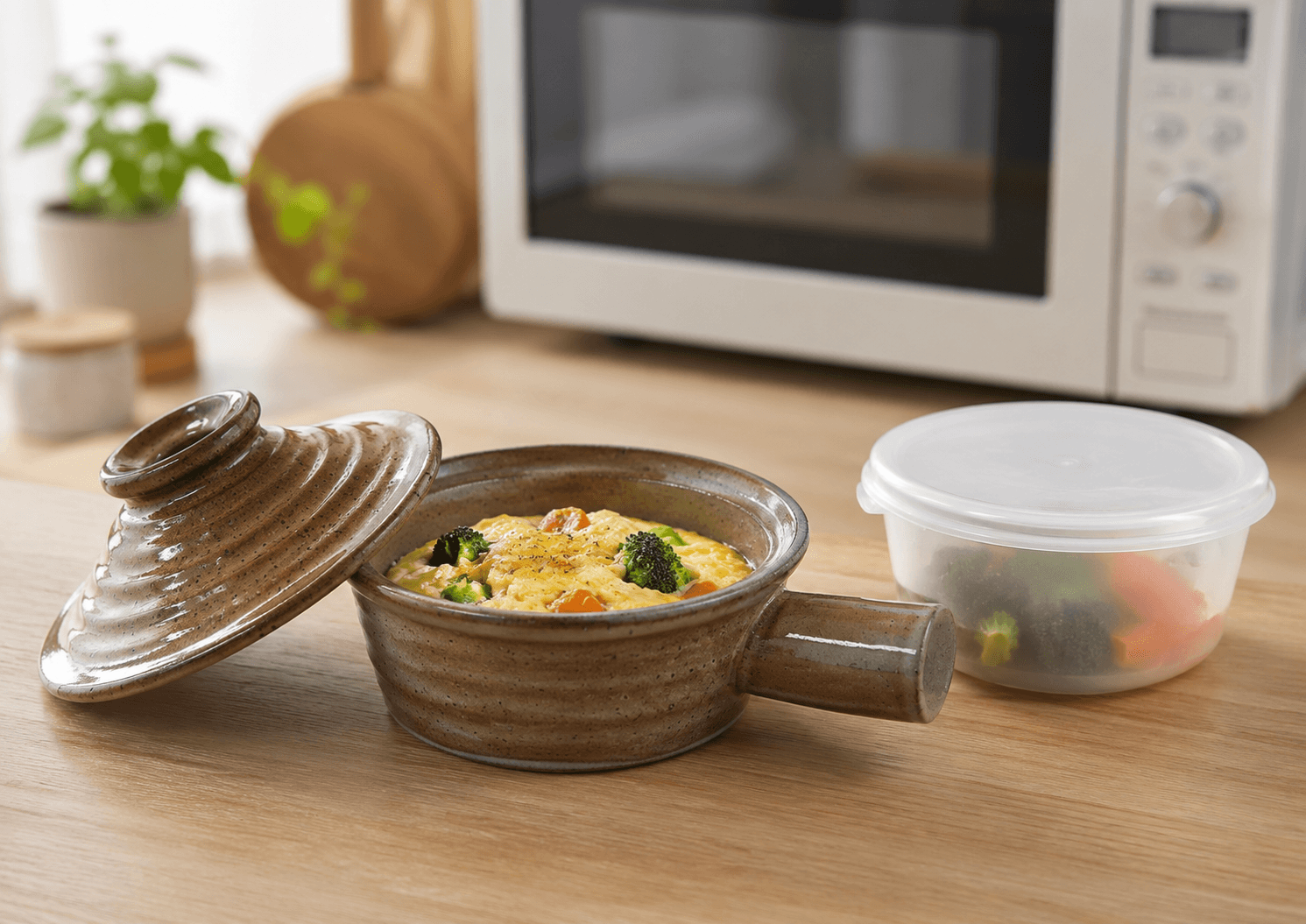
Microwave-safe plastic can be useful for storage and quick reheating, but for everyday microwave cooking, ceramic cookware is often the better choice. It feels sturdier, handles hot meals well, cleans easily, and makes quick microwave meals feel more like real cooking.
Most of us have reheated food in a plastic container at some point.
Leftover pasta. Soup from the fridge. Takeout rice. A quick lunch between meetings. Plastic containers are light, cheap, and easy to stack, so it makes sense that they end up in the microwave so often.
But if you use your microwave every day, you may start wondering: is ceramic microwave cookware a better choice than plastic?
The honest answer is this: microwave-safe plastic can be used as directed, but ceramic is often the better everyday choice for hot meals, repeated use, better durability, and a more comfortable eating experience.
Plastic is convenient. Ceramic feels more like real cookware.
Let’s break down the difference.
Quick Answer: Ceramic or Plastic?
For occasional reheating, a clean, undamaged, microwave-safe plastic container may be fine.
For everyday microwave cooking, ceramic is usually the better fit.
A microwave-safe ceramic cooker is especially useful if you regularly make:
- Eggs
- Vegetables
- Oatmeal
- Sauces
- Soups
- Warm desserts
- Small one-person meals
- Quick breakfasts or lunches
Ceramic is sturdy, reusable, easy to clean, and better suited to foods that get hot, steamy, or saucy. Plastic can work, but only when it is clearly labeled microwave-safe and still in good condition.
The key difference is simple: plastic often feels like storage. Ceramic feels like cooking.
What Counts as Microwave-Safe Plastic?
Not all plastic containers belong in the microwave.
A microwave-safe plastic container should be clearly labeled for microwave use. You may see words like:
- Microwave safe
- Safe for microwave use
- A microwave-safe symbol
- Instructions on the package or the bottom of the container
The USDA Food Safety and Inspection Service advises using only cookware specifically manufactured for microwave ovens. It also notes that some one-time-use plastic containers, such as takeout containers and margarine tubs, should not be used in the microwave because they can warp or melt.
That means you should avoid microwaving:
- Takeout containers
- Disposable plastic tubs
- Old food packaging
- Yogurt cups
- Butter or margarine tubs
- Cracked plastic containers
- Warped or stained plastic containers
- Plastic containers with no microwave-safe label
Even if a plastic container looks sturdy, that does not mean it was designed for heat.
Why Ceramic Is Popular for Microwave Cooking
Ceramic is commonly used in microwave cooking because microwaves generally pass through ceramic material and heat the water molecules in the food. The U.S. Food and Drug Administration explains that glass, paper, ceramic, and plastic are often used in microwave cooking because microwaves can pass through these materials, although containers can still become hot from the food inside.
That is why ceramic works well for everyday microwave meals.
It is not just about safety. It is also about how the food feels after cooking.
Ceramic cookware can make a quick microwave meal feel more like something you actually cooked, not just something you reheated in a storage box.
It also works well for warm, moist foods like eggs, vegetables, sauces, and desserts because ceramic holds heat nicely and can go from microwave to table without needing another dish.
Ceramic vs Plastic Microwave Cookware: Side-by-Side Comparison
| Feature | Ceramic Microwave Cookware | Plastic Microwave Containers |
|---|---|---|
| Best for | Hot meals, eggs, vegetables, sauces, desserts | Storage, short reheating, meal prep |
| Microwave safety | Safe when labeled microwave-safe and undamaged | Safe only when labeled microwave-safe and used as directed |
| Durability | Sturdy and reusable | Can warp, stain, crack, or scratch over time |
| Heat handling | Can get hot but stays structurally stable | May soften, warp, or melt if not microwave-safe |
| Food experience | Feels like real cookware or tableware | Feels more like storage |
| Cleanup | Easy to wash and less likely to hold odors | Can stain or hold smells, especially with sauces |
| Everyday cooking | Strong choice for repeated microwave use | Depends on plastic type and condition |
| Serving | Can often go from microwave to table | Usually less attractive for serving |
| Long-term use | Designed to be reused for cooking and serving | Often replaced more frequently |
The takeaway: plastic can be convenient, but ceramic is usually better for people who use the microwave as a real cooking tool, not just a reheating shortcut.
When Plastic Is Still Useful
Plastic is not useless. It has a place in the kitchen.
Microwave-safe plastic can be helpful for:
- Storing leftovers
- Packing lunches
- Keeping chopped ingredients in the fridge
- Short reheating when the container is labeled microwave-safe
- Lightweight meal prep
The important part is to use it properly.
Do not microwave plastic that is cracked, warped, cloudy, deeply scratched, stained, or not labeled for microwave use. Also be careful with very oily, sugary, or high-heat foods, because those can get extremely hot in the microwave.
A good rule of thumb: if the plastic was made for storage, use it for storage. If it was made for microwave heating, follow the label.
When Ceramic Is the Better Choice
Ceramic is the better choice when you are actually cooking in the microwave.
For example, ceramic microwave cookware works especially well for:
- Poached eggs
- Omelets
- Steamed vegetables
- Warm banana desserts
- Quick sauces
- Oatmeal
- Small rice dishes
- One-person meals
- Leftovers you want to eat straight from the dish
Ceramic also feels better when you are eating from it. A warm meal in a ceramic cooker feels more intentional than the same meal in a plastic box.
That matters for everyday cooking. If something feels easier and nicer to use, you are more likely to use it again.
Why a Ceramic Microwave Cooker Makes Sense
A ceramic microwave cooker is different from grabbing a random bowl from the cabinet.
A good microwave-safe ceramic cooker is designed for everyday heating and cooking. It can act as:
- A cooking vessel
- A serving dish
- A reheating container
- A small meal bowl
- A quick dessert dish
The lid is especially useful. It helps hold moisture inside, reduces splattering, and gently steams foods instead of letting them dry out.
That makes a ceramic cooker useful for recipes like:
- Microwave poached eggs
- Quick omelets
- Honey carrots
- Zucchini and tomatoes
- Baked banana dessert
- Fresh tomato sauce
- Steamed green beans
For a small kitchen, office lunch, dorm room, or busy weekday morning, that kind of one-dish cooking is practical.
Less setup. Less cleanup. Fewer containers.
Does Ceramic Get Hot in the Microwave?
Yes, ceramic can get hot in the microwave.
That does not automatically mean it is unsafe.
Microwaves heat the food, and the hot food transfers heat to the ceramic. Foods with water, sauces, steam, eggs, or sugar can make the dish quite hot.
This is normal.
Always use a dry towel, potholder, or oven mitt when removing ceramic from the microwave. If your cooker has a hollow handle or stay-cool handle design, that can make handling easier, but the body of the ceramic cooker may still become warm or hot.
Microwave-safe does not mean heat-proof to your hands.
What About Takeout Containers?
Takeout containers are one of the biggest gray areas in microwave cooking.
Some may look sturdy, but many are made for carrying food, not reheating it. Unless the container clearly says it is microwave-safe, it is better to transfer the food into a microwave-safe ceramic or glass before heating.
The USDA specifically warns that some one-time-use plastic containers should not be used in microwave ovens because they can warp or melt.
So if you are reheating restaurant leftovers, the safer routine is simple:
Move the food into a microwave-safe ceramic cooker, cover loosely, heat in short intervals, and stir or rest as needed.
Ceramic vs Plastic for Different Foods
Eggs
Ceramic is a better choice for eggs because eggs cook quickly and continue setting after the microwave stops. A ceramic cooker with a lid helps hold steam and reduce splatter.
Vegetables
Ceramic works well for vegetables because it helps trap moisture. A covered ceramic cooker can gently steam vegetables without needing a separate pot.
Sauces
Ceramic is helpful for sauces because it does not stain as easily as many plastics and feels better for serving.
Desserts
Warm desserts like baked banana, baked apple, or mug-style treats feel more natural in ceramic than in plastic.
Leftovers
Plastic may be fine for storage, but ceramic is often better for reheating and eating. You can heat the food and serve it in the same dish.
Practical Safety Tips for Microwave Cookware
- Check the label and use only containers marked microwave-safe.
- Avoid cracked ceramic, warped plastic, or damaged containers.
- Use short intervals because microwaves vary by wattage.
- Let food rest so heat can distribute more evenly.
- Vent the lid instead of sealing it airtight.
- Handle both ceramic and plastic carefully after heating.
So, Which One Is Better?
For storage, plastic is convenient.
For everyday microwave cooking, ceramic wins.
A microwave-safe ceramic cooker is sturdier, more pleasant to eat from, better for hot meals, and more useful when you want to cook instead of just reheat.
Plastic still has a place, especially for storing leftovers or packing food. But if your microwave is part of your daily cooking routine, ceramic microwave cookware is the smarter long-term choice.
FAQ
Is ceramic better than plastic for microwaving food?
For everyday cooking, yes, ceramic is often better. It is sturdy, reusable, easy to clean, and better suited to hot meals. Plastic can be used if it is clearly labeled as microwave-safe and still in good condition.
Is microwave-safe plastic really safe?
Microwave-safe plastic is designed to be used in the microwave according to the manufacturer’s instructions. However, it should not be damaged, warped, stained, or used beyond its intended purpose.
Can plastic melt in the microwave?
Yes. Plastic that is not made for microwave use can warp or melt from the heat of the food. That is why it is important to use only plastic containers labeled microwave-safe.
Can I microwave takeout containers?
Only if the container is clearly labeled as microwave-safe. Many takeout containers are one-time-use containers and should not be microwaved.
Why does ceramic get hot in the microwave?
Ceramic gets hot because the food inside heats up and transfers heat to the dish. This is normal, even with microwave-safe ceramic cookware.
What is the best cookware for microwave meals?
For everyday microwave meals, microwave-safe ceramic cookware is a strong choice because it can cook, reheat, and serve food in the same dish.
Final Takeaway
Plastic containers are useful for storage, but they are not always the best choice for cooking.
If you microwave food often, especially hot meals, eggs, vegetables, sauces, or desserts, a dedicated ceramic microwave cooker is a more practical everyday tool. It feels better, lasts longer, cleans easily, and turns quick microwave meals into something that feels more like real cooking.
For busy mornings, small kitchens, quick lunches, and simple weeknight meals, ceramic microwave cookware is a smart upgrade.
Make Microwave Meals Feel Like Real Cooking
Want a simple way to cook quick breakfasts, warm desserts, vegetables, sauces, and small meals in the microwave? Explore our microwave-safe ceramic cooker and 5-minute recipe book made for easy everyday cooking.
Shop the Ceramic Microwave Cooker