
Most people think of the microwave as a place to reheat leftovers, soften butter, or warm up a cup of coffee. With the right cookware, though, it can also handle small, freshly prepared meals—from eggs and vegetables to potatoes, shrimp, sauces, and simple desserts.
That is where a ceramic microwave cooker comes in.
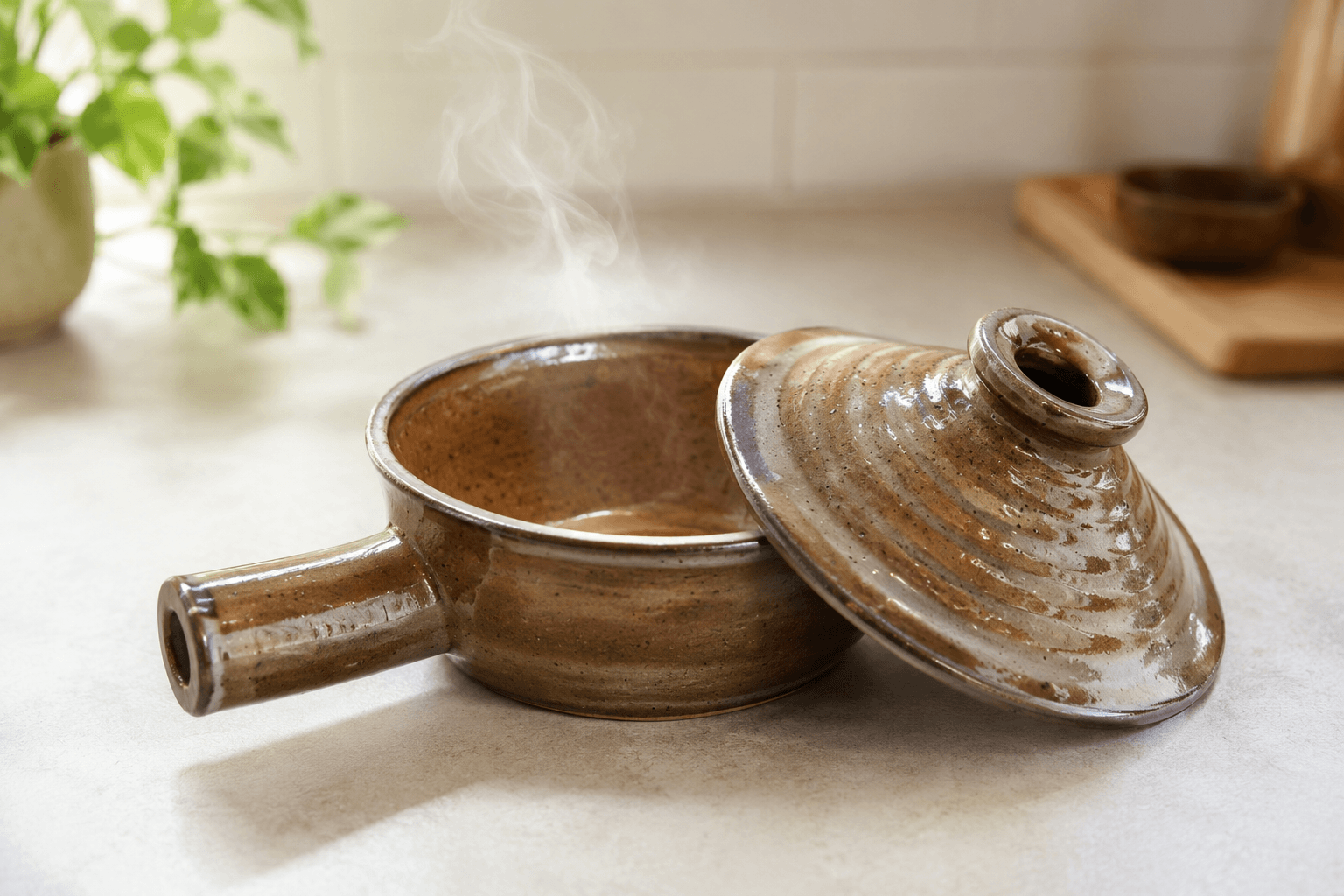
At first glance, it may look like a small ceramic bowl with a lid. Look a little closer, and you will notice several important differences: a domed cover, a chimney opening in the center, a deeper cooking shape, and a handle designed for easier lifting.
So, how does a ceramic microwave cooker work, and what does that chimney actually do?
The Quick Answer
A ceramic microwave cooker does not create heat by itself. Microwave energy heats the food inside the pot, while the cooker creates a covered environment that helps manage moisture, splatter, and steam.
The domed lid keeps some moisture close to the food instead of allowing it to escape immediately. At the same time, the chimney gives excess steam a path out of the cooker, so the pot remains covered without being completely sealed.
Together, these features make small-portion microwave cooking easier to manage, with fewer dishes left to wash afterward.
How Microwave Cooking Actually Works
Before looking at the cooker itself, it helps to understand what the microwave is doing.
A microwave oven sends electromagnetic energy into the cooking cavity. That energy is absorbed mainly by water, fat, and sugar molecules in food. Their movement generates heat inside the food.
In other words, the ceramic pot is not a miniature heating element. The food is being heated by microwave energy, while the pot provides the shape and covered environment in which the food cooks.
Microwave cooking is not always perfectly even. Food thickness, moisture, shape, starting temperature, position, and portion size can all change how quickly different areas heat. This is why many microwave recipes call for stirring, rotating, checking, or allowing the food to rest.
A well-designed microwave cooking pot cannot eliminate every hot or cool area. What it can do is provide a more controlled setup for preparing small portions.
What Is a Ceramic Microwave Cooker?
A ceramic microwave cooker is a microwave-safe cooking vessel made for preparing food, rather than simply holding food while it reheats.
The Everyday Microwave cooker brings several features together in one compact setup:
- A microwave-safe ceramic cooking pot
- A fitted, domed ceramic lid
- A central steam-release chimney
- A hollow side handle
- A compact capacity suited to individual servings
- Recipes developed around the cooker’s size and cooking method
That combination is what separates it from placing a plate over an ordinary cereal bowl.
The cooker is especially useful when you want to prepare one serving without heating a full-size oven, pulling out several pans, or leaving a sink full of dishes behind.
How the Chimney Design Works
The chimney is the opening in the center of the cooker’s lid. Its purpose is simple: it gives rising steam a defined path to escape.
As food heats, moisture inside the ingredients begins to turn into steam. Some of that steam stays beneath the domed lid, creating a warm, moist environment around the food. Excess steam can then move toward and out through the chimney.
The important distinction: the cooker is covered, but it is not airtight.
Important: The chimney should remain open while the cooker is in use. It should not be blocked or covered in an attempt to trap more moisture.
Covering food while allowing steam to escape is a common microwave-cooking principle. It helps retain moisture without turning the container into a completely sealed vessel.
What the Domed Lid Does
The chimney releases excess steam, while the domed lid helps keep part of the cooking moisture close to the food.
Without a cover, moisture can escape quickly from foods such as eggs, vegetables, potatoes, and lean proteins. You may also end up with splatter across the microwave walls and ceiling.
It Helps Reduce Splatter
Sauces, eggs, vegetables, and foods containing fat or water may bubble and pop as they heat. The lid helps keep much of that mess inside the cooker.
It Helps Retain Moisture
Keeping some steam around the food can reduce surface drying, especially during short cooking times.
It Supports Gentle Steam Cooking
Vegetables and other moisture-rich ingredients can cook partly in the steam they release. Some recipes need a small amount of added water, while others naturally contain enough moisture.
It Leaves Room Above the Food
The domed shape creates space for ingredients to expand and for steam to move before it reaches the chimney.
A lid does not guarantee perfectly even cooking. Portion size, microwave wattage, ingredient placement, stirring, and resting time still matter.
What Role Does the Ceramic Pot Play?
The ceramic body serves as both the cooking vessel and the serving dish.
Microwave energy can pass through suitable ceramic cookware and reach the food inside. However, that does not mean every ceramic bowl or handmade dish is automatically suitable for microwave use.
Always use ceramic cookware that is specifically made or labeled for microwave cooking. Avoid dishes with metallic trim, unknown decorative materials, or visible cracks. For more guidance, read Is Ceramic Microwave Safe? What to Know Before You Cook.
The Everyday Microwave cooker is designed for microwave cooking and allows ingredients to be prepared, cooked, and served in the same container.
Ceramic can still become hot because heat transfers from the food to the pot. Even with a hollow handle, the cooker and lid should be handled carefully after cooking. Keep a potholder nearby, especially for recipes with longer cooking times.
Ceramic Microwave Cooker vs. a Regular Bowl
Can some microwave recipes be made in an ordinary microwave-safe bowl? Yes. But the cooking setup and experience are not exactly the same.
| Regular Microwave-Safe Bowl | Ceramic Microwave Cooker |
|---|---|
| May not include a fitted cover | Includes a matching domed lid |
| Usually has no dedicated steam outlet | Central chimney gives excess steam a path to escape |
| Shape may be intended mainly for serving | Compact shape is suited to small-portion cooking |
| May be awkward to lift when hot | Includes a hollow side handle |
| May require a separate plate or cover | Pot and fitted lid work together |
| No cooking instructions included | Comes with recipes developed for the cooker |
| Often used mainly for reheating | Designed for both cooking and reheating |
The point is not that an ordinary microwave-safe bowl is useless. A dedicated ceramic microwave cooker simply gives you a more complete setup for mixing, covering, cooking, serving, and cleaning.
What Happens Inside the Cooker?
Imagine cooking a small serving of vegetables.
First, microwave energy begins heating the water naturally present in the vegetables. As their temperature rises, some of that moisture turns to steam.
The lid slows the immediate loss of moisture and keeps a warm, humid environment around the food. The chimney allows excess steam to escape rather than trapping it inside a sealed container.
When the microwave stops, heat continues to move through the food for a short time. This is why a brief standing period can help the temperature and texture settle before serving.
When opening the cooker, lift or tilt the lid away from your face and hands. The steam inside may be hotter than expected.
What Can You Cook in a Ceramic Microwave Cooker?
A compact microwave cooker works best for individual servings and small recipes.
Depending on the ingredients, recipe, and microwave power, it can be used for:
- Scrambled eggs and omelets
- Poached eggs
- Diced potatoes
- Broccoli, carrots, green beans, and zucchini
- Shrimp dishes
- Simple tomato sauces
- Warm dips
- Breakfast bowls
- Baked apples and bananas
- Small cakes and warm desserts
Foods with natural moisture are generally well suited to covered microwave cooking. Drier ingredients may need a small amount of water, broth, butter, or sauce, depending on the recipe.
The cooker is not intended to reproduce every result you would get from a skillet or conventional oven. Microwave cooking does not naturally create the same searing, browning, or crisp exterior as dry-heat cooking.
It can soften and cook diced potatoes, for example, but it will not create the same crisp surface as oven-roasted potatoes. It is a different cooking method designed around speed, convenience, and small portions.
How to Use a Ceramic Microwave Cooker
-
Add the Ingredients
Place the measured ingredients inside the ceramic pot. Follow a recipe developed for the cooker when possible, especially when preparing eggs, dense vegetables, or foods that expand.
-
Leave Enough Room
Do not fill the cooker all the way to the top. Leave space for bubbling, expansion, and steam movement.
-
Put the Lid in Place
Set the domed lid on the pot as designed. Make sure the central chimney remains open and unobstructed.
-
Start With the Shorter Cooking Time
Begin at the lower end of the suggested range. You can always add another 10 or 20 seconds, but an overcooked egg or dried-out shrimp cannot be undone.
-
Let the Food Rest
After cooking, allow the food to stand briefly when the recipe recommends it. This gives heat time to continue moving through the ingredients.
-
Open the Lid Carefully
Tilt the lid away from yourself so the remaining steam escapes in the opposite direction from your face and hands.
Microwave Wattage Makes a Difference
Microwave cooking times are not universal.
A recipe tested in a lower-wattage microwave may cook more quickly in a 1,000- or 1,200-watt model. A compact office or dorm microwave may need additional time.
You can usually find your microwave’s wattage on a label inside the door, on the back of the appliance, or in the owner’s manual.
For more consistent results:
- Check your microwave wattage.
- Begin with the shortest recommended time.
- Add more time in short intervals.
- Stir or rearrange the food when the recipe allows.
- Make a note of the cooking time that works in your microwave.
After preparing a recipe once or twice, you will have a much better idea of the timing that works for your own appliance.
Tips for Better Results
Cut Ingredients Into Similar-Size Pieces
Small, evenly cut pieces generally cook more consistently than a combination of large and tiny pieces.
Do Not Overfill the Cooker
Leaving extra space helps prevent bubbling ingredients from reaching the lid or spilling over.
Add Liquid Only When the Recipe Calls for It
Ingredients such as zucchini and tomatoes release plenty of moisture. Potatoes and carrots may benefit from a small amount of added liquid. Follow the individual recipe rather than applying one rule to every dish.
Stir When Appropriate
Stirring can help sauces, diced vegetables, and some egg dishes cook more consistently.
Use Short Intervals Near the End
An extra minute can be too long for a small portion. Once the food is nearly ready, add time in 10- to 20-second intervals.
Allow a Short Standing Time
A brief rest can help the heat redistribute and allow the final texture to develop.
Handle the Pot and Lid Carefully
The hollow handle helps make the cooker easier to move, but temperatures vary by recipe and microwave. Treat the cooker as hot until you have checked it.
What a Ceramic Microwave Cooker Does Not Do
Understanding the product’s limits is just as useful as understanding its benefits.
A ceramic microwave cooker:
- Is not a pressure cooker
- Should not be sealed airtight
- Does not guarantee the same cooking time in every microwave
- Does not automatically eliminate all hot and cool areas
- Does not brown food like a skillet
- Does not make every ceramic dish microwave-safe
- Should not be used on a stovetop or in another appliance unless the product instructions specifically allow it
Its purpose is simpler: to make everyday, small-portion microwave cooking easier to manage.
Frequently Asked Questions
Does the chimney make food cook faster?
The chimney is not a heating element. Its main role is to give excess steam a path to escape while the covered design helps manage moisture around the food.
Cooking time still depends on the ingredients, portion size, starting temperature, microwave wattage, and recipe.
Is a ceramic microwave cooker the same as a microwave steamer?
There is some overlap, but the two are not exactly the same. A traditional microwave steamer often has a separate water reservoir and a raised basket.
A ceramic microwave cooker holds ingredients directly in the pot. Moisture comes from the food itself or from a small amount of liquid added according to the recipe.
Can I use a microwave-safe plate as a cover?
A microwave-safe plate can act as a loose cover for some reheating tasks. However, it does not provide the same fitted dome, central steam path, handle, or portion-specific setup as a chimney cooker.
Is ceramic microwave cookware better than plastic?
Both materials should only be used when they are specifically made or labeled for microwave use.
Ceramic may appeal to people who prefer cooking without plastic and want a dish that can move easily from microwave to table. Learn more in Ceramic vs. Plastic Microwave Cookware: Which Is Better?
Why does the ceramic cooker become hot?
The food heats during microwaving and transfers some of that heat to the ceramic. Foods containing more water, fat, or sugar may become especially hot.
Always check the handle carefully and use a potholder when needed.
Should I block the chimney to keep more moisture inside?
No. The chimney should remain open during cooking. Use the recipe’s recommended ingredients and liquid amount rather than trying to seal the opening.
Can a ceramic microwave cooker prepare a complete meal?
It can prepare many complete individual dishes, depending on the recipe. Its compact capacity is best suited to single servings, sides, breakfasts, snacks, and desserts rather than large family meals.
A Small Pot That Changes How You Use the Microwave
A ceramic microwave cooker does not turn a microwave into a conventional oven, and it does not rely on complicated technology.
Its usefulness comes from a thoughtful combination of simple features:
- A compact ceramic pot for individual portions
- A domed lid that helps manage moisture and splatter
- A chimney that gives excess steam a path to escape
- A handle that makes the pot easier to move
- Recipes created around the cooker’s size and cooking method
Once you stop treating the microwave as nothing more than a reheating appliance, it becomes much more useful. Breakfast, vegetables, small dinners, and warm desserts can all begin and end in the same little pot.
A Simpler Way to Cook Small Meals in the Microwave
The Everyday Microwave Ceramic Cooker is made for the moments when you want one warm meal without pulling out several pans. Its compact ceramic pot, domed lid, steam-release chimney, and hollow handle work together to make small-portion microwave cooking easier to manage.
Prepare eggs, vegetables, potatoes, shrimp, sauces, and simple desserts in the same dish, then use the included recipe booklet to discover more ways to turn your microwave into an everyday cooking tool.
Curious to see the cooker up close?
Explore its design, included recipe booklet, and the kinds of small meals you can prepare in it.
See the Ceramic Microwave CookerKeep Reading
Food safety note: Microwave wattage and cooking performance vary. Follow the recipe instructions, check food carefully, and use appropriate food-safety temperatures when preparing meat, poultry, seafood, or egg dishes.